Embark on a journey into the world of predictive analytics with Data Robot through this informative guide. From understanding the basics to exploring advanced features, this introduction sets the stage for an insightful exploration of this fascinating topic.
As we delve deeper, we will uncover the intricacies of predictive analytics, shedding light on its significance in modern decision-making processes.
Overview of Predictive Analytics with Data Robot
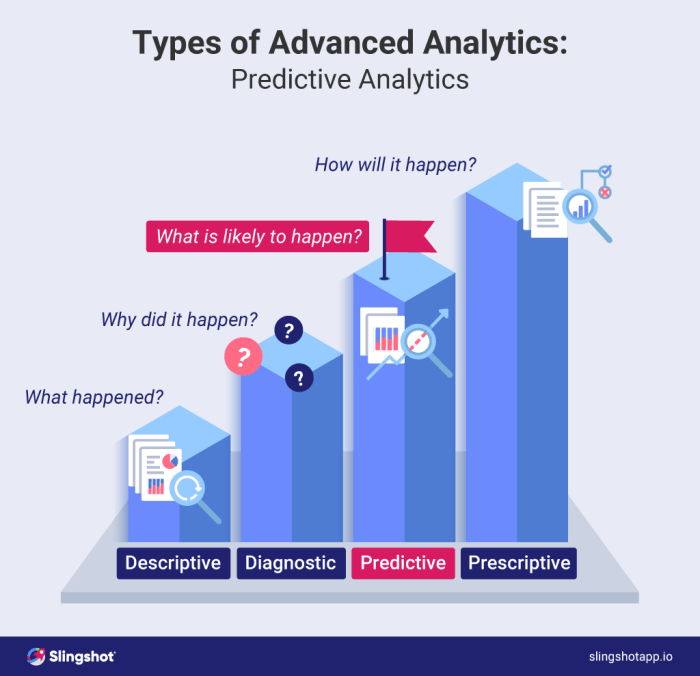
Predictive analytics involves using historical data to predict future outcomes and trends. It utilizes statistical algorithms and machine learning techniques to identify patterns and make informed predictions.Data Robot is a leading platform in the field of predictive analytics, offering automated machine learning solutions to help organizations build and deploy predictive models quickly and efficiently.
With Data Robot, users can easily analyze data, create predictive models, and generate insights to support decision-making processes.Predictive analytics plays a crucial role in decision-making processes by providing valuable insights and predictions based on data analysis. It helps organizations make informed decisions, optimize operations, and gain a competitive edge in the market.Using Data Robot for predictive analytics offers several benefits, including increased efficiency, accuracy, and scalability.
The platform automates the process of building and deploying predictive models, saving time and resources. Additionally, Data Robot's advanced algorithms and machine learning capabilities enable users to uncover valuable insights from their data, leading to better decision-making and improved business outcomes.
Getting Started with Data Robot
To begin using Data Robot for predictive analytics, you'll need to follow a few key steps to set up the platform and import your data. Understanding the data requirements and how to navigate the interface are essential for beginners to get started effectively.
Setting Up Data Robot
- Sign up for a Data Robot account and log in to the platform.
- Follow the prompts to create a new project for your predictive analytics analysis.
- Connect Data Robot to your data sources, such as CSV files or databases, to access the necessary data for analysis.
Data Requirements for Predictive Analytics
- Ensure your data is clean, structured, and relevant to the analysis you want to perform.
- Have a clear understanding of the variables and data types in your dataset to effectively build predictive models.
- Consider the quality and quantity of data available to train and test your predictive models accurately.
Importing Data into Data Robot
- Use the Data Robot interface to import your data files or connect to external data sources.
- Verify that the data has been imported correctly and review any data preparation steps recommended by Data Robot.
- Explore the data within Data Robot to understand its characteristics and identify patterns for predictive modeling.
Tips for Navigating the Data Robot Interface
- Take advantage of the guided workflows and tutorials provided by Data Robot to learn how to use the platform effectively.
- Experiment with different features and settings to explore the full capabilities of Data Robot for predictive analytics.
- Seek help from the Data Robot community or support resources if you encounter any challenges or have questions about using the platform.
Building Predictive Models
Building predictive models using Data Robot involves a systematic process of data preparation, model selection, training, evaluation, and deployment. Data Robot simplifies this complex process by automating various steps and providing a user-friendly interface for data scientists and analysts.
Different Algorithms in Data Robot
Data Robot offers a wide range of algorithms for modeling, including linear regression, decision trees, random forests, gradient boosting, neural networks, and more. Each algorithm has its strengths and weaknesses, and Data Robot helps users select the most suitable algorithm based on the dataset and the prediction task.
- Linear Regression: Suitable for predicting continuous numerical values based on linear relationships in the data.
- Decision Trees: Useful for understanding complex relationships in the data and making predictions based on a series of decision rules.
- Random Forests: Ensemble learning method that combines multiple decision trees to improve prediction accuracy.
- Gradient Boosting: Another ensemble method that builds a series of weak learners to create a strong predictive model.
- Neural Networks: Deep learning approach that can capture intricate patterns in the data but requires more computational resources.
Performance Comparison of Predictive Models
Data Robot enables users to compare the performance of different predictive models through metrics like accuracy, precision, recall, F1 score, and ROC curves. By evaluating the models on a validation dataset, users can identify the best-performing model for their specific prediction task.
It is essential to consider both the predictive accuracy and the interpretability of the models when selecting the final model for deployment.
Real-World Applications of Predictive Models with Data Robot
Predictive models built with Data Robot have been successfully applied in various industries, such as finance, healthcare, marketing, and retail. For example, banks use predictive models to assess credit risk and detect fraudulent transactions, while healthcare providers use predictive models to improve patient outcomes and optimize resource allocation.
- In marketing, predictive models help businesses identify customer segments, personalize marketing campaigns, and forecast sales trends.
- In retail, predictive models are used for demand forecasting, inventory management, pricing optimization, and customer churn prediction.
Evaluating and Optimizing Predictive Models
When it comes to predictive analytics with Data Robot, evaluating and optimizing predictive models is crucial for achieving accurate results and making informed decisions based on data-driven insights.
Evaluating Model Performance
Before deploying a predictive model in a real-world scenario, it is essential to evaluate its performance to ensure its effectiveness and reliability. Data Robot offers various techniques to assess the performance of predictive models:
- Utilizing metrics such as accuracy, precision, recall, and F1 score to measure the model's predictive power.
- Performing cross-validation to test the model on different subsets of data and ensure its generalizability.
- Generating ROC curves and AUC scores to assess the model's ability to distinguish between classes.
Optimizing Model Accuracy
Optimizing predictive models in Data Robot involves fine-tuning various parameters to improve accuracy and maximize performance. Some techniques for optimizing predictive models include:
- Feature engineering to select relevant variables and enhance the model's predictive power.
- Hyperparameter tuning to adjust model settings and improve overall performance.
- Ensembling methods such as bagging and boosting to combine multiple models for better accuracy.
Interpreting Results and Making Data-Driven Decisions
Interpreting the results of predictive models in Data Robot is essential for extracting valuable insights and making informed decisions. Best practices for interpreting model outputs and making data-driven decisions include:
- Understanding the significance of different metrics and how they impact the model's performance.
- Visualizing model outputs and predictions to gain a better understanding of the data patterns and trends.
- Using model explanations and feature importance to identify key factors driving predictions and outcomes.
Advanced Features and Customization
When it comes to taking your predictive analytics to the next level, Data Robot offers a range of advanced features and customization options that can help you fine-tune your models and workflows for optimal performance.
Advanced Features Overview
Let's delve into some of the advanced features that Data Robot provides:
- Automated Time Series Modeling: Data Robot's automated time series modeling capabilities allow you to easily build accurate forecasts for time-dependent data.
- Ensemble Modeling: By combining multiple models, Data Robot's ensemble modeling feature can enhance predictive accuracy and robustness.
- Feature Engineering: Data Robot enables you to create and manipulate features to improve model performance and interpretability.
Customization Options
Customizing models and workflows in Data Robot is essential for tailoring your predictive analytics process to meet your specific needs. Here are some ways you can customize your models:
- Algorithm Selection: Data Robot allows you to choose from a wide range of algorithms to build your predictive models, giving you flexibility in model selection.
- Feature Selection: You can manually select features or use automated feature selection techniques to optimize model performance.
- Hyperparameter Tuning: Fine-tuning hyperparameters can significantly impact model performance, and Data Robot provides tools for automating this process.
Automation Tips
To make the most of Data Robot's automation capabilities, consider the following tips:
- Regularly Monitor Models: Keep an eye on model performance and retrain models as needed to ensure continued accuracy.
- Utilize Automated Insights: Data Robot's automated insights feature can provide valuable information on model behavior and performance.
Advanced Analytics Scenarios
With Data Robot, you can tackle complex analytics scenarios with ease. Here are some examples of advanced analytics scenarios that Data Robot can help you address:
- Anomaly Detection: Detecting anomalies in data can be challenging, but Data Robot's advanced algorithms make it easier to identify outliers and unusual patterns.
- Customer Segmentation: Segmenting customers based on behavior and characteristics is crucial for targeted marketing, and Data Robot can assist in creating accurate customer segments.
Closing Notes
In conclusion, this guide has equipped you with the necessary knowledge to navigate the realm of predictive analytics with Data Robot. Armed with these insights, you are now ready to harness the power of data-driven predictions to drive informed decisions and achieve tangible results.
Common Queries
What are the key benefits of using Data Robot for predictive analytics?
Answer: Data Robot offers automated machine learning capabilities, making it easier for beginners to build predictive models without extensive coding knowledge.
How can one evaluate the performance of predictive models in Data Robot?
Answer: Performance evaluation in Data Robot involves analyzing metrics like accuracy, precision, recall, and F1 score to assess the model's effectiveness.
What are some advanced analytics scenarios that can be achieved with Data Robot?
Answer: Data Robot allows users to delve into complex analytics tasks such as time series forecasting, anomaly detection, and natural language processing.