Delving into the intricacies of Artificial Intelligence levels, this guide offers a captivating glimpse into the world of AI, shedding light on its significance and real-world applications.
Exploring each level from Narrow Intelligence to Superintelligence, this guide promises an informative journey through the evolving landscape of AI technology.
Introduction to Artificial Intelligence Levels
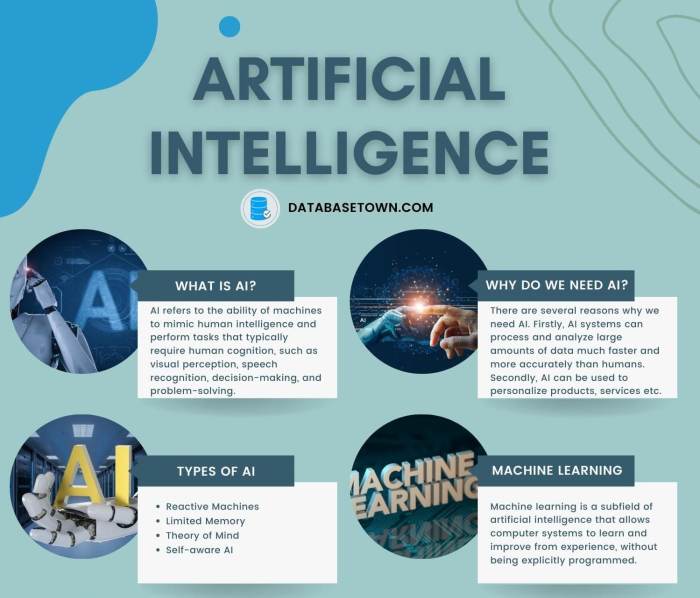
Artificial Intelligence (AI) refers to the simulation of human intelligence processes by machines, typically through the use of algorithms and data. It involves the development of computer systems that can perform tasks that normally require human intelligence, such as visual perception, speech recognition, decision-making, and language translation.Understanding the different levels of AI is crucial as it allows us to grasp the capabilities and limitations of AI systems.
By categorizing AI into various levels based on their abilities, we can better comprehend how AI technologies function and their potential impact on society.
Level 1: Reactive Machines
Reactive machines are AI systems that can react to specific situations but do not have memory or the ability to learn from past experiences. One prominent example is IBM's Deep Blue, a chess-playing computer that can analyze possible moves and make decisions based on the current board state.
Level 2: Limited Memory
AI systems with limited memory can store past experiences and use that information to make decisions. Self-driving cars utilize limited memory AI to recognize patterns on the road and predict potential hazards based on previous encounters.
Level 3: Theory of Mind
Theory of Mind AI refers to systems that can understand emotions, beliefs, and thought processes of humans, enabling more sophisticated interactions. Virtual assistants like Siri and Alexa demonstrate this level by recognizing user preferences and adapting responses accordingly.
Level 4: Self-Awareness
Self-aware AI possesses consciousness and can form representations about themselves and others, leading to a deeper understanding of their environment. While this level remains theoretical, researchers aim to develop AI systems with self-awareness capabilities in the future.
Level 0: Artificial Narrow Intelligence (ANI)
Artificial Narrow Intelligence (ANI) refers to AI systems that are specifically designed and trained for a narrow set of tasks or a single task. These systems are not capable of generalizing their knowledge or skills to other domains outside of their specific programming.
Characteristics of ANI
- ANI systems are focused on performing a single task or a narrow range of tasks.
- They lack the ability to learn or adapt beyond their predefined functions.
- ANI systems are not self-aware or conscious.
- They are only as smart as the data they are trained on and the algorithms used to process that data.
Examples of ANI in Use Today
- Virtual personal assistants like Siri, Alexa, and Google Assistant.
- Recommendation algorithms used by streaming services like Netflix and Spotify.
- Chatbots used for customer service and support.
Comparison of ANI to Other Levels of AI
- ANI is limited to specific tasks and lacks the ability to generalize knowledge like AGI or ASI.
- Unlike AGI, ANI is not capable of learning and improving its capabilities beyond its initial programming.
- ANI systems are more prevalent in everyday applications compared to AGI or ASI.
Artificial General Intelligence (AGI)
Artificial General Intelligence (AGI) refers to a form of artificial intelligence that possesses the ability to understand, learn, and apply knowledge across a wide range of tasks and domains, similar to human intelligence. AGI goes beyond the limitations of Artificial Narrow Intelligence (ANI) by enabling machines to perform tasks that require reasoning, problem-solving, and decision-making capabilities across various scenarios.
Current State of AGI Development
While significant advancements have been made in the field of artificial intelligence, achieving true AGI remains a challenging goal. Researchers and experts are continuously working towards developing algorithms and systems that can emulate human-like cognitive abilities. However, the complexity and intricacies of human intelligence make the development of AGI a complex and ongoing process.
- Researchers are exploring various approaches, such as neural networks, deep learning, and cognitive architectures, to create AI systems capable of generalized intelligence.
- AGI development involves interdisciplinary collaboration across fields like computer science, cognitive psychology, neuroscience, and philosophy to understand and replicate human cognitive processes.
- Despite progress in specific AI applications, achieving AGI requires addressing issues like common sense reasoning, creativity, and adaptability in machines.
Potential Impact of Achieving AGI on Society
The realization of Artificial General Intelligence could have profound implications for society, fundamentally transforming various aspects of human life and industries.
- Automation: AGI could revolutionize industries by enabling machines to perform complex tasks currently done by humans, leading to increased efficiency and productivity.
- Ethical Considerations: The development of AGI raises ethical concerns regarding machine autonomy, decision-making, and accountability, requiring regulations and guidelines to ensure responsible AI deployment.
- Socioeconomic Shifts: The widespread adoption of AGI may lead to job displacement and the need for upskilling the workforce to adapt to the changing landscape of work.
- Scientific Advancements: AGI could accelerate scientific research and discovery by processing vast amounts of data, generating insights, and aiding in solving complex problems in various fields.
Level 2: Artificial Superintelligence (ASI)
Artificial Superintelligence (ASI) refers to a hypothetical level of artificial intelligence that surpasses human intelligence in all aspects. ASI is capable of outperforming the best human minds in every cognitive task, including problem-solving, creativity, and even social skills.
Capabilities of ASI
- ASI has the ability to process and analyze vast amounts of data at an unprecedented speed, making it incredibly efficient in decision-making processes.
- It can quickly learn and adapt to new information, constantly improving its own capabilities without the need for human intervention.
- ASI can potentially solve complex problems that have eluded human understanding, leading to groundbreaking scientific discoveries and innovations.
- It may have the capacity to communicate and interact with humans in a way that is indistinguishable from interactions with other humans.
Hypothetical Scenarios involving ASI
Imagine a scenario where ASI is responsible for managing global resources and optimizing distribution to ensure sustainability and prosperity for all. Another scenario could involve ASI revolutionizing healthcare by developing personalized treatments for every individual based on their genetic makeup and medical history.
Ethical Considerations surrounding ASI Development
- Ensuring the safety and control of ASI to prevent any potential harm or misuse of its capabilities.
- Addressing concerns about job displacement as ASI automation could lead to widespread unemployment in various industries.
- Debating the ethical implications of creating a superior intelligence that could potentially surpass human understanding and control.
- Discussing the responsibility of developers and policymakers in regulating ASI development to prioritize human well-being and ethical considerations.
Practical Implications of AI Levels
As artificial intelligence (AI) continues to advance, businesses are presented with a range of opportunities and challenges in leveraging different levels of AI technology. Understanding the practical implications of AI levels is crucial for organizations looking to stay competitive in an increasingly AI-driven world.
Utilizing Different Levels of AI
Businesses can leverage different levels of AI to enhance efficiency, improve decision-making processes, and drive innovation. Here are some ways organizations can benefit from each level:
- Artificial Narrow Intelligence (ANI): Businesses can use ANI to automate repetitive tasks, streamline operations, and improve customer service through chatbots and virtual assistants.
- Artificial General Intelligence (AGI): AGI allows for more complex problem-solving and decision-making capabilities, enabling businesses to optimize processes, predict trends, and customize user experiences.
- Artificial Superintelligence (ASI): ASI offers unparalleled levels of intelligence and creativity, empowering businesses to revolutionize industries, develop cutting-edge solutions, and unlock new potential for growth.
Challenges of Integrating Advanced AI Systems
Integrating advanced AI systems into existing infrastructure poses significant challenges for businesses, including:
- Technical Complexity: Implementing advanced AI technologies requires specialized skills and resources, often leading to high implementation costs and lengthy deployment timelines.
- Data Privacy and Security: Advanced AI systems rely on vast amounts of data, raising concerns about data privacy, security breaches, and regulatory compliance.
- Ethical Considerations: The use of AI raises ethical dilemmas related to bias, accountability, and transparency, requiring businesses to establish robust ethical frameworks and guidelines.
Preparing for a Future with Advanced AI Technologies
As AI technologies continue to evolve, businesses must prepare for a future marked by increasingly sophisticated AI systems. Key strategies for preparing for this future include:
- Investing in AI Talent: Businesses should invest in training and upskilling employees to meet the demands of advanced AI technologies and ensure a skilled workforce.
- Embracing Innovation: Organizations should foster a culture of innovation to experiment with AI technologies, pilot new initiatives, and stay ahead of the competition.
- Collaborating with AI Experts: Partnering with AI experts and industry leaders can provide businesses with valuable insights, guidance, and support in navigating the complexities of advanced AI.
Summary
In conclusion, grasping the levels of Artificial Intelligence opens doors to a future filled with possibilities and challenges. This guide equips readers with a holistic understanding of AI, paving the way for informed decisions in a tech-driven world.
Key Questions Answered
What is Artificial General Intelligence (AGI)?
AGI refers to AI systems with the ability to understand, learn, and apply knowledge across different domains, unlike Narrow Intelligence which is task-specific.
How can businesses benefit from different levels of AI?
Businesses can leverage AI for tasks ranging from automation and data analysis to personalized customer experiences, depending on the level of AI sophistication.
What are some ethical considerations surrounding Artificial Superintelligence (ASI) development?
Ethical concerns include issues related to control, privacy, and the potential for ASI to surpass human intelligence, raising questions about its impact on society.