Exploring the differences between Data Robot and Traditional Machine Learning opens up a world of insights into the evolving landscape of machine learning. As we delve into the intricacies of these two approaches, a fascinating journey awaits, filled with contrasting methodologies and impactful outcomes.
Detailing the unique characteristics that set Data Robot apart from traditional machine learning methods, this discussion promises to shed light on the key disparities that shape the realm of data analysis and prediction.
Data Robot vs Traditional Machine Learning
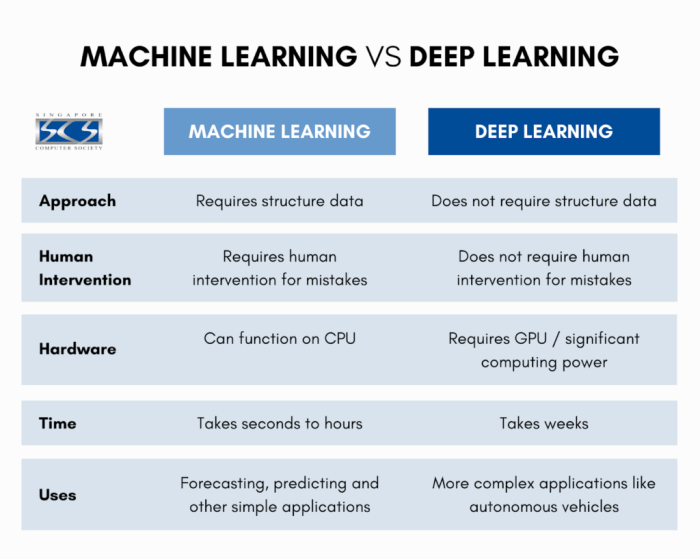
When it comes to the realm of machine learning, two main approaches stand out: Data Robot and traditional machine learning methods. Let's delve into the key differences between these two methodologies.
Data Robot in Machine Learning
Data Robot is an automated machine learning platform that aims to streamline the process of developing machine learning models. It utilizes advanced algorithms to automate the various steps involved in model building, from data preparation to model deployment.
Traditional Machine Learning Methods
Traditional machine learning methods refer to the manual approach of developing machine learning models. This involves tasks such as feature engineering, model selection, hyperparameter tuning, and evaluation, all of which are done manually by data scientists or machine learning engineers.
Comparison of Approaches
- Data Robot automates many of the tedious and time-consuming tasks involved in building machine learning models, allowing for faster model development and deployment.
- Traditional machine learning methods require human intervention at every stage of the model development process, which can be labor-intensive and prone to human error.
- Data Robot leverages the power of automation and advanced algorithms to quickly iterate through different models and hyperparameters, optimizing model performance.
- Traditional machine learning methods rely on the expertise and experience of data scientists to manually fine-tune models, which can be a time-consuming process.
- Data Robot is designed to be user-friendly, allowing users with varying levels of machine learning expertise to build and deploy models effectively.
- Traditional machine learning methods require a deep understanding of machine learning concepts and algorithms, making it less accessible to those without a strong background in the field.
Data Robot
Data Robot is a powerful platform that automates the machine learning process, making it more accessible to users with varying levels of expertise. By automating tasks such as data preprocessing, model selection, and hyperparameter tuning, Data Robot streamlines the process of building and deploying machine learning models.
Industries where Data Robot is commonly used
- Finance: Data Robot is often used in the finance industry for activities such as risk management, fraud detection, and algorithmic trading.
- Healthcare: In healthcare, Data Robot can be utilized for tasks like patient diagnosis, treatment planning, and predicting patient outcomes.
- Retail: Retail companies leverage Data Robot for demand forecasting, inventory management, and personalized marketing campaigns.
Advantages of using Data Robot
- Data Robot accelerates the machine learning process, allowing users to quickly iterate through different models and configurations.
- With its automated feature engineering capabilities, Data Robot can handle complex datasets and extract valuable insights without manual intervention.
- Data Robot's transparency and interpretability features help users understand how models make predictions, increasing trust and enabling regulatory compliance.
- By democratizing machine learning, Data Robot empowers users across various industries to leverage the power of data analysis and prediction tasks without extensive data science knowledge.
Traditional Machine Learning
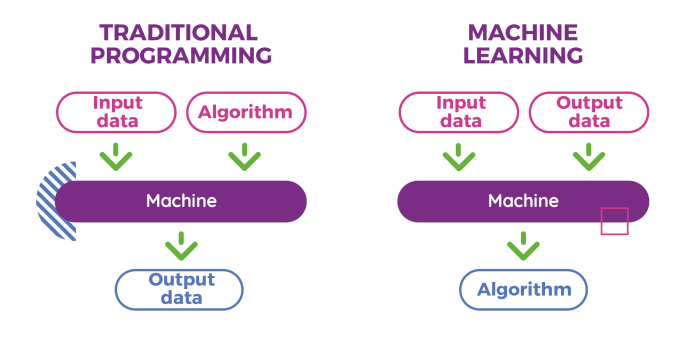
Traditional machine learning involves a manual process that requires data scientists to manually select and engineer features, choose algorithms, and tune hyperparameters.
Steps in Traditional Machine Learning Workflows
- Data Collection: Gathering relevant data from various sources.
- Data Preprocessing: Cleaning, transforming, and preparing the data for analysis.
- Feature Selection: Identifying the most important features for the model.
- Model Selection: Choosing the appropriate algorithm for the problem.
- Training the Model: Fitting the selected algorithm on the training data.
- Hyperparameter Tuning: Adjusting the settings of the model to optimize performance.
- Evaluation: Assessing the model's performance on unseen data.
- Deployment: Implementing the model for predictions in real-world scenarios.
Challenges Faced in Traditional Machine Learning Methods
- Time-Consuming: Manual feature engineering and hyperparameter tuning can be labor-intensive and time-consuming.
- Expertise Required: Data scientists need in-depth knowledge to select the right algorithms and parameters.
- Overfitting: There is a risk of overfitting the model to the training data, leading to poor generalization.
- Scalability Issues: Traditional methods may struggle to handle large datasets efficiently.
Key Differences
Data Robot and traditional machine learning algorithms differ in various technical aspects, scalability, accuracy, and speed. Let's delve into the key differences between the two approaches.
Technical Differences
Data Robot utilizes automated machine learning (AutoML) to handle various aspects of the machine learning process, such as data preprocessing, feature engineering, model selection, and hyperparameter tuning. On the other hand, traditional machine learning algorithms require manual intervention at each stage, leading to longer development cycles and potentially suboptimal models.
Scalability Impact
Data Robot is designed to be highly scalable, allowing for the efficient processing of large datasets and the ability to handle complex modeling tasks with ease. In contrast, traditional machine learning methods may struggle with scalability, especially when dealing with massive amounts of data, leading to performance bottlenecks and slower processing times.
Accuracy and Speed Differences
Data Robot's automated approach can often lead to more accurate models in a shorter amount of time compared to traditional machine learning methods. By leveraging advanced algorithms and computational resources effectively, Data Robot can deliver high-quality models with improved speed and efficiency.
Traditional machine learning, while effective, may require more time and effort to achieve similar levels of accuracy and performance.
Concluding Remarks
In conclusion, the comparison between Data Robot and Traditional Machine Learning unravels a tapestry of diverging techniques and implications for the future of data-driven decision-making. As we navigate through the nuances of these contrasting paradigms, the significance of choosing the right approach becomes even more evident in the quest for accurate insights and efficient outcomes.
Questions Often Asked
What sets Data Robot apart from traditional machine learning methods?
Data Robot stands out by automating the machine learning process, offering a more efficient and streamlined approach compared to the manual steps involved in traditional methods.
How does scalability differ between Data Robot and traditional machine learning?
Data Robot showcases superior scalability capabilities, enabling seamless handling of large datasets and complex models, unlike the limitations faced by traditional methods.
What are some challenges commonly encountered when using traditional machine learning methods?
Traditional machine learning methods often face challenges related to manual data preprocessing, model selection, and tuning, which can be time-consuming and less efficient compared to automated processes like Data Robot.