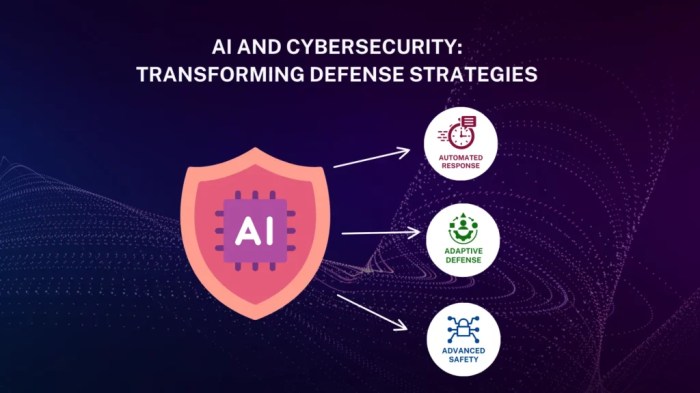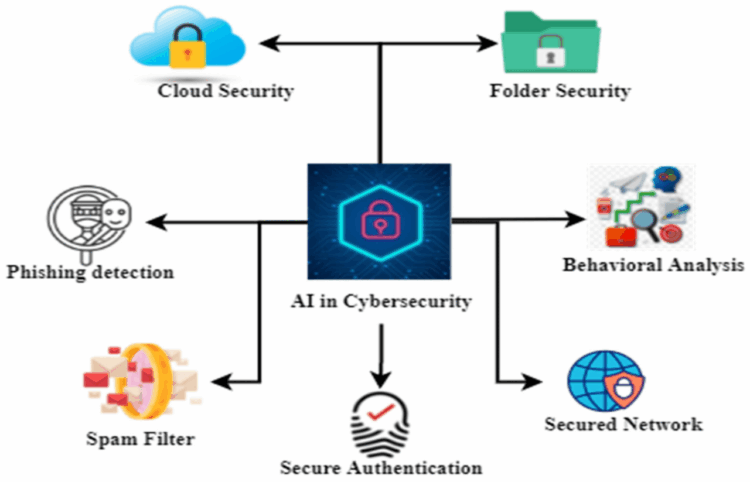
How AI Improves Cybersecurity for Financial Institutions sets the stage for this enthralling narrative, offering readers a glimpse into a story that is rich in detail with a casual formal language style and brimming with originality from the outset.
The use of AI in cybersecurity for financial institutions is crucial in today's digital landscape. With cyber threats evolving rapidly, AI technologies play a vital role in detecting and preventing potential breaches. Let's delve deeper into how AI is revolutionizing cybersecurity for financial entities.
Importance of AI in Cybersecurity for Financial Institutions
AI plays a crucial role in enhancing cybersecurity for financial institutions by providing advanced tools and capabilities to detect, prevent, and respond to cyber threats effectively. With the increasing sophistication of cyber attacks targeting the financial sector, AI technologies have become indispensable in safeguarding sensitive data and preventing financial fraud and data breaches.Utilization of AI in Cybersecurity
- AI-powered threat detection systems can analyze vast amounts of data in real-time to identify suspicious patterns and anomalies that may indicate a potential cyber attack.
- Machine learning algorithms can continuously learn from new data and adapt to evolving threats, improving the overall security posture of financial institutions.
- Natural language processing (NLP) capabilities enable AI systems to analyze and understand complex financial documents and communications, helping to identify and mitigate risks more efficiently.
Significance of AI in Mitigating Financial Fraud and Data Breaches
- AI-based fraud detection systems can detect fraudulent activities in real-time by analyzing transaction data, user behavior, and other relevant factors to flag suspicious transactions for further investigation.
- Advanced AI algorithms can help financial institutions proactively identify vulnerabilities in their systems and networks, allowing them to strengthen their cybersecurity defenses and prevent potential data breaches.
- By leveraging AI technologies, financial institutions can enhance their overall cybersecurity posture, reduce the risk of financial losses due to cyber attacks, and maintain the trust and confidence of their customers.
AI-Powered Threat Detection and Prevention
 Artificial Intelligence (AI) plays a crucial role in enhancing cybersecurity for financial institutions by enabling advanced threat detection and prevention mechanisms. One of the key capabilities of AI in this context is its ability to analyze vast amounts of data to identify potential security breaches that may go unnoticed by traditional security measures.
Real-Time Threat Detection and Response
AI algorithms are designed to operate in real-time, constantly monitoring and analyzing network traffic, user behavior, and system logs to detect any anomalies or suspicious activities. By leveraging machine learning and pattern recognition, AI can quickly identify potential threats and alert security teams for immediate response. This proactive approach enables financial institutions to mitigate risks and prevent potential cyber attacks before they escalate.Proactive Prediction and Prevention
Moreover, AI can proactively predict and prevent cyber attacks by continuously learning from past incidents and adapting its detection capabilities to evolving threats. Through predictive analytics and threat intelligence, AI-powered systems can anticipate potential security vulnerabilities and take preventive measures to strengthen the institution's defenses. This predictive approach is essential in safeguarding sensitive financial data and maintaining the trust of customers in an increasingly digital landscape.Enhanced Authentication and Access Control
AI plays a crucial role in improving authentication processes and access control mechanisms for financial institutions. By leveraging biometrics, behavioral analytics, and multi-factor authentication, AI enhances security measures to protect sensitive financial dataBiometric Authentication
- Biometric authentication uses unique physical characteristics such as fingerprints, facial recognition, or iris scans to verify the identity of users.
- AI algorithms analyze biometric data in real-time to ensure secure access to financial accounts and transactions.
- Examples of AI-powered biometric authentication solutions include fingerprint scanners on mobile devices and facial recognition technology in banking apps.
Behavioral Analytics
- Behavioral analytics track user behavior patterns to detect anomalies or suspicious activities that may indicate unauthorized access.
- AI algorithms learn from user interactions and identify deviations from normal behavior to prevent fraudulent transactions.
- Financial institutions use AI-powered behavioral analytics tools to continuously monitor user actions and enhance access control.
Multi-Factor Authentication
- Multi-factor authentication combines two or more verification methods, such as passwords, SMS codes, security tokens, or biometrics, to ensure secure access.
- AI algorithms assess multiple authentication factors to validate user identity and reduce the risk of unauthorized access to financial systems.
- AI-powered multi-factor authentication solutions provide an extra layer of security to safeguard sensitive financial data and transactions.
Compliance and Regulatory Support with AI
AI plays a crucial role in helping financial institutions comply with various regulations such as GDPR, PCI DSS, and other industry standards. By automating compliance processes and enhancing monitoring capabilities, AI ensures that organizations adhere to regulatory requirements and avoid costly penalties.Automating Compliance Processes
AI systems can streamline and automate compliance processes by analyzing vast amounts of data in real-time. This allows financial institutions to identify and address potential compliance issues proactively, reducing the risk of non-compliance.Monitoring and Reporting Compliance
AI-powered tools enable continuous monitoring of regulatory changes and help institutions stay up-to-date with evolving compliance requirements. These systems can also generate detailed reports on compliance status, making it easier to demonstrate adherence to regulatory authorities when required.End of Discussion
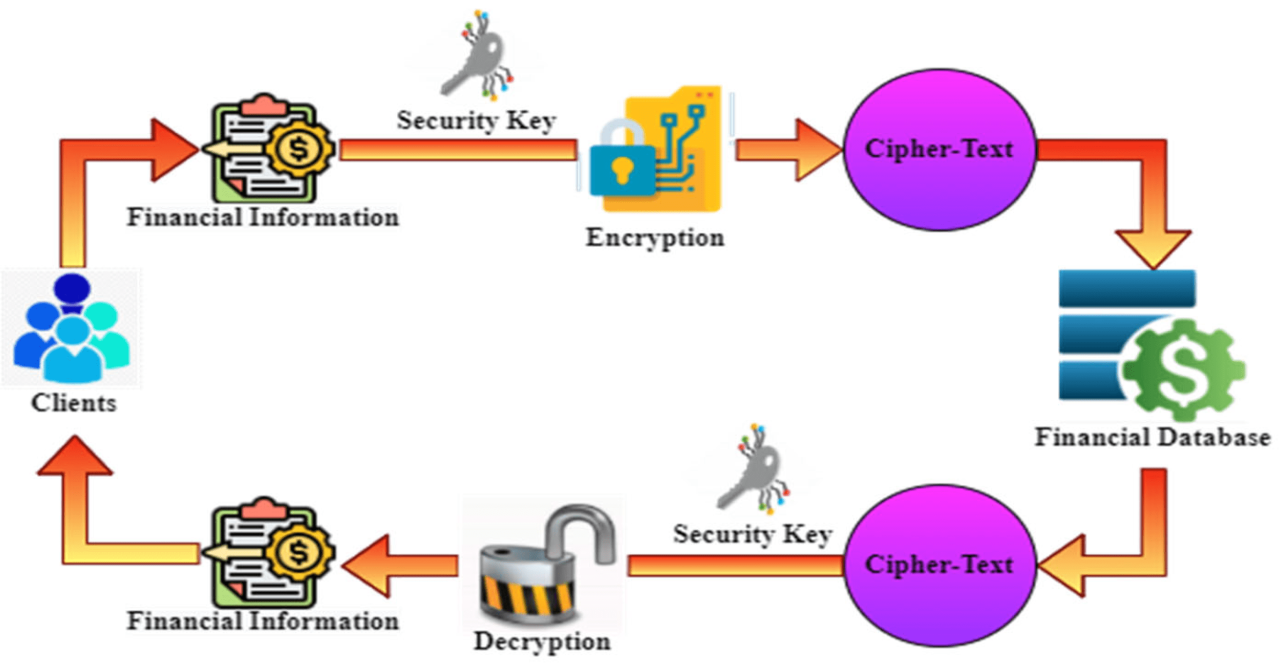
In conclusion, the integration of AI into cybersecurity measures for financial institutions is paramount. By leveraging AI algorithms for threat detection, enhancing authentication processes, and ensuring regulatory compliance, financial entities can stay ahead of cyber threats and safeguard sensitive data effectively. The future of cybersecurity in the financial sector undoubtedly lies in the hands of AI.
FAQ
How does AI enhance authentication processes for financial institutions?
AI improves authentication by utilizing biometrics, behavioral analytics, and multi-factor authentication to enhance security measures.
What role does AI play in compliance and regulatory support for financial institutions?
AI helps in automating compliance processes, ensuring adherence to industry standards, and monitoring/reporting regulatory compliance to relevant authorities.
Can AI predict and prevent cyber attacks in real-time for financial institutions?
Yes, AI can proactively predict and prevent cyber attacks before they occur by analyzing data patterns and identifying potential security breaches.