How Level AI Impacts Everyday Technology sets the stage for this enthralling narrative, offering readers a glimpse into a story that is rich in detail and brimming with originality from the outset.
As we delve deeper, we uncover the profound influence AI has on our daily technological interactions, shaping the way we live and interact with our environment.
Introduction to AI in Everyday Technology
AI, or artificial intelligence, plays a crucial role in shaping our everyday technological experiences. By integrating AI into various devices and applications, we are able to enjoy smarter, more efficient, and more personalized technology that adapts to our needs. From voice assistants to recommendation algorithms, AI has become an indispensable part of our daily lives.
Examples of AI-powered Technologies
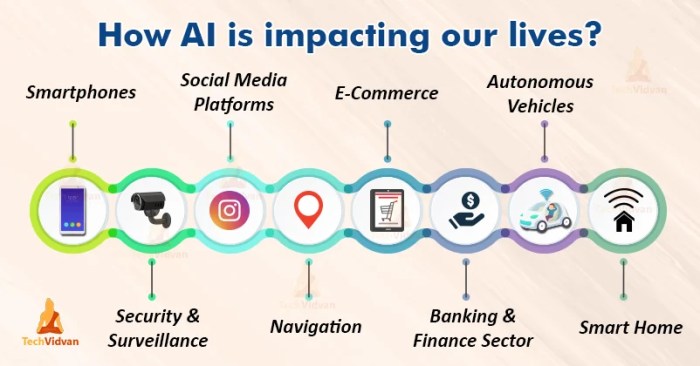
- Smart Assistants: Virtual assistants like Siri, Alexa, and Google Assistant utilize AI to understand and respond to user commands, helping with tasks like setting reminders, playing music, or answering questions.
- Recommendation Systems: Platforms like Netflix, Amazon, and Spotify use AI algorithms to analyze user preferences and behavior, recommending personalized content such as movies, products, or music.
- Autonomous Vehicles: Self-driving cars rely on AI to process real-time data from sensors and cameras, enabling them to navigate roads safely and make split-second decisions.
- Facial Recognition: AI-powered facial recognition technology is used in smartphones, security systems, and social media platforms to identify individuals, unlock devices, or tag friends in photos.
AI in Smart Home Devices
Smart home devices have become increasingly popular due to the convenience and efficiency they provide in our daily lives. Artificial Intelligence (AI) plays a crucial role in enhancing the functionality of smart devices such as thermostats, lights, and security systems.
Enhancing Functionality
AI algorithms enable smart home devices to learn from user behavior and preferences, allowing them to adjust settings automatically. For example, smart thermostats can analyze temperature patterns in the home and optimize heating or cooling to save energy without sacrificing comfort.
Lights equipped with AI can adjust brightness levels based on natural light and occupancy, enhancing energy efficiency. Security systems with AI can detect unusual activities and send alerts to homeowners, improving safety.
Impact on Energy Efficiency and Convenience
AI-driven smart home devices have a significant impact on energy efficiency by optimizing usage based on real-time data. This not only reduces energy consumption but also leads to cost savings for homeowners. Additionally, the convenience offered by AI-enabled devices simplifies daily routines by automating tasks such as adjusting temperature, lighting, and security settings.
Examples of Improving Daily Routines
- Smart thermostats like Nest Learning Thermostat can learn users' schedules and preferences to create a personalized heating and cooling plan, saving energy and enhancing comfort.
- Philips Hue smart lights can be controlled remotely through voice commands or smartphone apps, allowing users to customize lighting based on their activities and moods.
- AI-powered security cameras such as Ring can detect motion and provide real-time alerts to homeowners, enhancing home security even when they are away.
AI in Personal Assistants and Voice Recognition
Personal assistants like Siri, Alexa, and Google Assistant have revolutionized the way we interact with technology through the integration of Artificial Intelligence (AI). These AI-powered assistants can understand and respond to spoken commands, making tasks easier and more efficient for users.
Evolution of Voice Recognition Technology
Voice recognition technology has significantly evolved with the integration of AI. Initially, voice commands were limited in their capabilities and often misunderstood user input
- AI algorithms analyze speech patterns and context to understand user commands accurately.
- Machine learning techniques enable personal assistants to adapt and improve their recognition capabilities over time.
- Natural language processing (NLP) algorithms help in understanding complex queries and providing relevant responses.
Benefits of Voice-controlled AI
Voice-controlled AI offers numerous benefits in various applications, enhancing user experience and convenience in everyday tasks.
-
Searching:
Users can perform quick searches by simply speaking their queries, eliminating the need for typing and making information retrieval faster.
-
Scheduling:
Personal assistants can schedule appointments, set reminders, and manage tasks based on voice commands, streamlining organizational processes.
-
Entertainment:
Voice-controlled AI enables users to play music, control smart home devices, and access entertainment content hands-free, enhancing the overall entertainment experience.
AI in Healthcare Technology
Artificial Intelligence (AI) is revolutionizing the healthcare industry, offering innovative solutions that enhance diagnostics, personalize medicine, and improve patient care. By leveraging AI technologies, healthcare providers can achieve more accurate diagnoses, tailor treatment plans to individual patients, and enhance overall patient experiences.
AI Applications in Diagnostics
AI-powered diagnostic tools are capable of analyzing vast amounts of medical data to identify patterns and trends that may go unnoticed by human healthcare professionals. These tools can help detect diseases at an early stage, leading to timely interventions and improved treatment outcomes.
Personalized Medicine with AI
AI algorithms can analyze genetic information, medical records, and lifestyle factors to develop personalized treatment plans for patients. This tailored approach to medicine ensures that individuals receive the most effective treatments based on their unique characteristics, ultimately leading to better health outcomes.
Enhancing Patient Care with AI
AI technologies are being used to streamline administrative tasks, optimize workflows, and improve communication between healthcare providers and patients. Virtual health assistants, powered by AI, can offer round-the-clock support, answer patient queries, and provide personalized health recommendations, enhancing overall patient experiences.
Ethical Considerations and Challenges
As AI continues to play a significant role in healthcare, it is crucial to address ethical considerations and challenges associated with its implementation. Issues such as data privacy, algorithm bias, and the impact on the doctor-patient relationship need to be carefully navigated to ensure that AI technologies are used responsibly and ethically in healthcare settings.
Conclusive Thoughts
In conclusion, How Level AI Impacts Everyday Technology illuminates the transformative power of AI in our daily lives, paving the way for a future where innovation and convenience intertwine seamlessly.
FAQ Explained
How does AI in smart home devices enhance energy efficiency?
AI in smart home devices optimizes energy usage by learning patterns and adjusting settings accordingly, leading to reduced energy consumption.
What are some popular AI-powered technologies used in daily life?
Popular AI-powered technologies include virtual assistants like Siri, facial recognition systems in smartphones, and recommendation algorithms in streaming services.
How is AI transforming healthcare technology?
AI is revolutionizing healthcare by enabling quicker diagnostics, personalized treatment plans, and improved patient care through data analysis and predictive modeling.